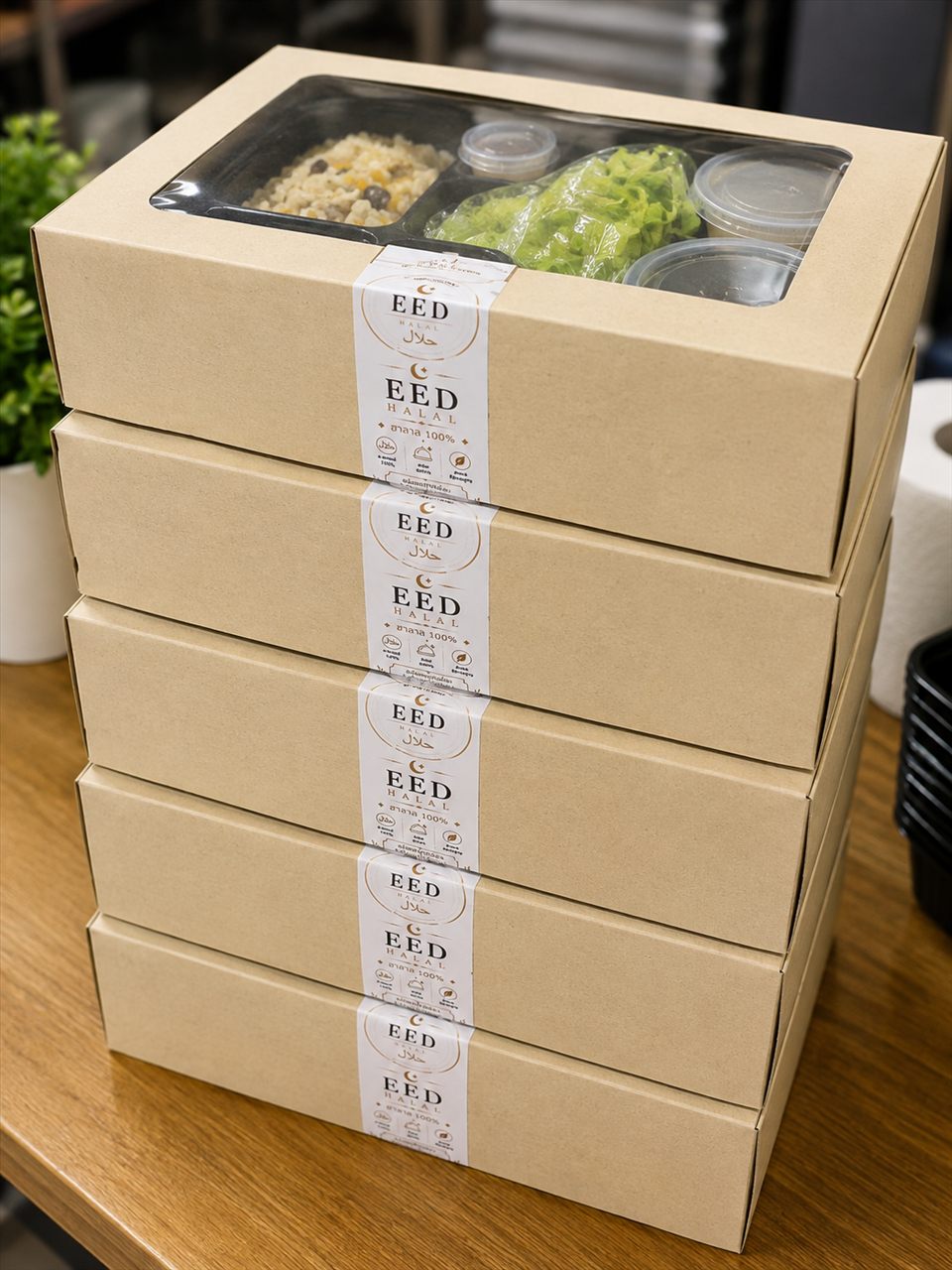
Ordering halal meal boxes for your company is not like ordering regular lunch for yourself. You are not deciding for just one person — you are deciding for employees, guests, speakers, and the finance department all at once. A single mistake can affect trust, reimbursement documents, and on-site punctuality.
The safest approach is to use a checklist before confirming any vendor. This article distills it down to 5 things to check that you can apply whether you are organizing a 20-box meeting or a multi-hundred box seminar.
The word "halal" on a shop sign or in a sales chat is not enough for corporate work. What you really need is a vendor that can prove it, has verifiable documents, and communicates on-site like a professional.
5 Things to Check Before Ordering Halal Meal Boxes for Your Company
This is the most important point. If a vendor has no halal certificate or cannot show you one, do not make a deposit. Ask directly who issued the certificate, what the number is, and whether the business name on the certificate matches the vendor you are speaking with.
For Thailand, the most widely used reference among event organizers is certification from CICOT or the relevant Islamic committee, because it can be verified. If the vendor has a link or copy of the certificate that can be forwarded to your procurement team, it will greatly reduce internal follow-up time.
Check one more layer: make sure the certificate is still valid and that the scope of certification covers the type of service you are purchasing — such as central kitchen, restaurant, or catering service.
Many people only ask "Is this menu halal?" but the better question is "What kind of halal kitchen prepares this menu?" because the real risk is often in shared kitchen spaces and equipment. If a vendor cannot explain ingredient separation, chopping boards, woks, and cross-contamination prevention, their back-end system may not be solid enough for corporate work.
Vendors that are genuinely halal can usually explain these steps quite clearly, because they get asked these questions often by corporate clients, universities, hospitals, and organizations that need to serve food to diverse groups at the same event.
Good food that cannot be reimbursed is a problem for the procurement department. A service provider suited for corporate work should be able to answer immediately what documents they can issue, what company information is needed, and whether VAT applies.
At minimum, they should provide a Quotation for budget approval, a regular Receipt (not a VAT tax invoice) for payment confirmation and reimbursement, and Company Documents for accounting. If a vendor's answers are unclear or they say "we'll sort it later," treat it as a warning sign — because on the actual event day there will be no time to chase paperwork.
Even if a vendor has all the certificates, if they deliver late on meeting day, the problem remains. So before finalizing an order, ask about minimum order quantity, order cutoff time, daily production capacity, and backup plans in case of traffic or last-minute quantity changes.
On the EED HALAL website, we clearly communicate that corporate workflow starts at 20+ boxes and provide information about Free delivery by zone: zone 1 50+ boxes, zone 2 75+ boxes, zone 3 75+ boxes, zone 4 100+ boxes; zone 5 has no free delivery on the FAQ page. When a vendor can state these numbers clearly, it is a sign that their back-end system has real processes and management, not guesswork.
This last point may seem minor, but it matters greatly in practice. Almost every corporate order has small details — separate meeting room names, add vegetarian sets, change delivery time, or adjust quantities before the event day. If a vendor responds slowly, incompletely, or sends information back and forth, you will waste more time fixing things than you expect.
A vendor suited for corporate work should send quotations quickly, confirm terms in writing, and have a dedicated point of contact who follows through until delivery day — not a different person every time who loses information.
Practical Summary
If you only have a few minutes to check before ordering, use this order: Check the certificate first, then ask about the kitchen and documents, then discuss production capacity and coordination. A vendor that passes all 5 checks is typically one suited for long-term corporate work because they genuinely reduce your team's workload.
- Has halal certificate with reference number, matching business name, and valid date
- Can clearly explain halal kitchen, equipment separation, and back-end systems
- Provides quotation, regular receipt, and company documents in full
- Gives clear answers on minimum order, production capacity, and delivery time
- Responds quickly, can adjust details, and has a clear point of contact
If your company holds frequent meetings, it is more cost-effective to vet a vendor through this checklist once and use them as a regular provider, rather than starting from scratch every time.